Job Market Paper

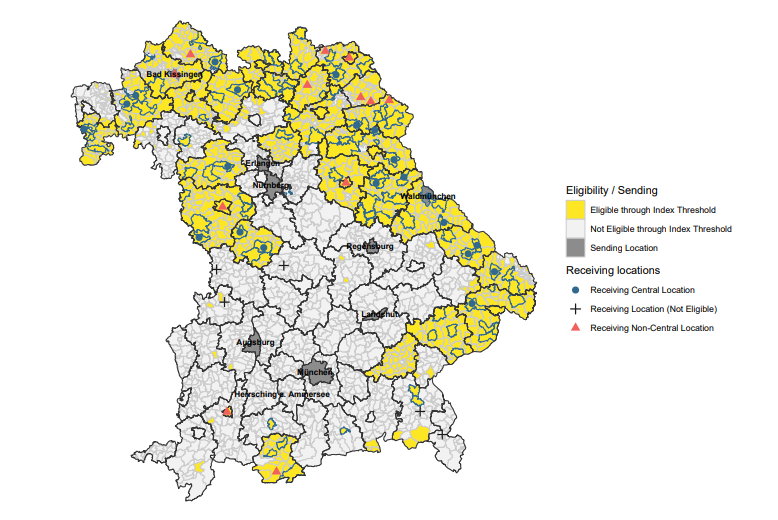
Map of eligible, sending, and receiving locations in Bavaria

Job Market Paper

New draft available soon!

The Effect of Public Sector Relocations on Regional Development in Germany

Combining newly collected relocation data with administrative employer–employee records, I estimate the consequences of public-job relocations for both the places gaining and losing employment. I then develop a quantitative spatial model in which public and private employment generate different productivity spillovers, linking the reduced-form evidence to the spatial mechanism.
Selected presentations: NBER, CEPR, EALE, UEA, IAB

Publications

Cover of The Economics of Place-Based Policies

Book chapter · Forthcoming

The Potential of Public Employment Reallocation as a Place-Based Policy

Forthcoming in The Economics of Place-Based Policies, ed. Cecile Gaubert, Gordon H. Hanson, and David Neumark, University of Chicago Press. NBER Working Paper 33432.

Brings together international evidence on purpose-built and relocated capitals and public-agency decentralization programs. The chapter asks when public-employment relocation can generate local spillovers and whether those gains come at the expense of the regions that lose government jobs.

Work in Progress

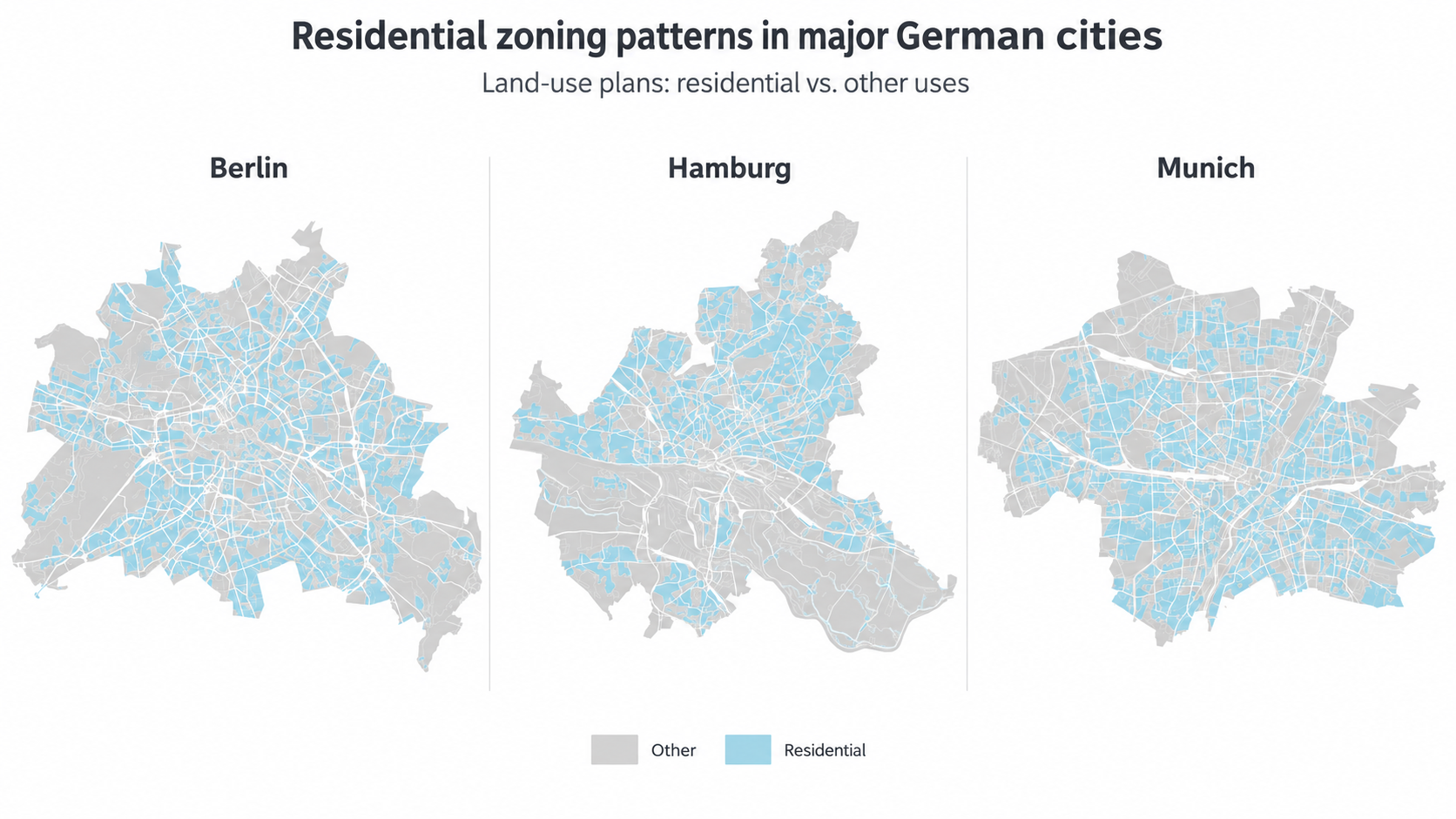
Residential zoning patterns in Berlin, Hamburg, and Munich

Work in progress

The Growth–Affordability Trade-off in Zoning

With Gabriel Ahlfeldt, Jan Bakker, and Nina Gläser

We combine matched employer–employee data with an original postcode-level zoning dataset covering all of Germany and discipline a spatial general-equilibrium model. The project quantifies how allocating land between residential and commercial uses affects housing affordability, firm agglomeration, productivity, distributional outcomes, and welfare.

Policy Paper

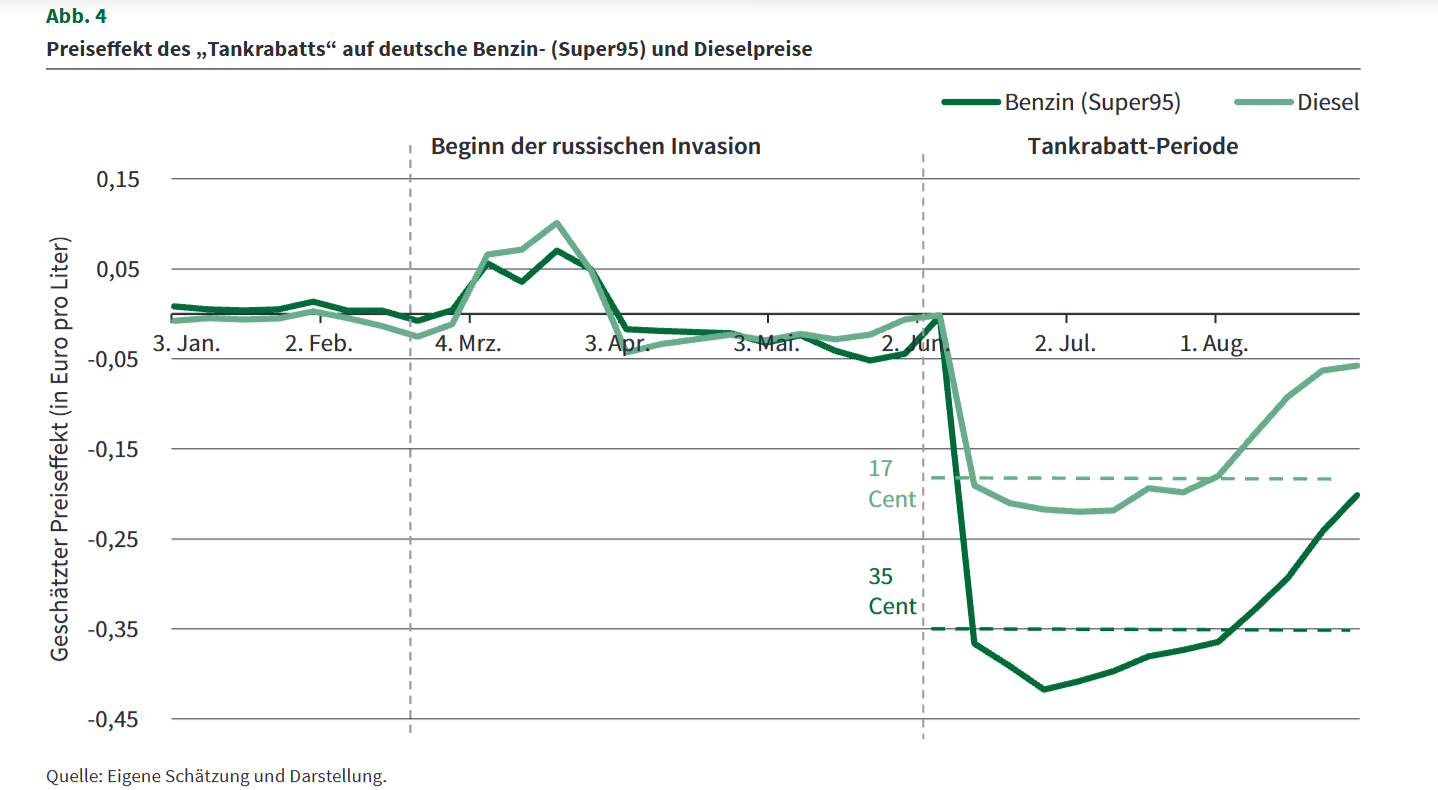
Estimated effects of Germany’s temporary fuel-tax cut on gasoline and diesel prices

Policy paper

35 cents less for gasoline and 17 cents less for diesel — The fuel tax reduction was passed on to consumers — on average

With S. Syga · ifo Dresden berichtet 29 (2022), 13–18

We exploit Germany’s temporary 2022 fuel-tax reduction and comparable reforms in other European countries to estimate pass-through using dynamic difference-in-differences. The analysis shows how quickly and how fully temporary tax relief reaches consumers, and how pass-through varies across countries and over time.

Coverage: DNN · Bundeskartellamt · German Bundestag

Working Papers

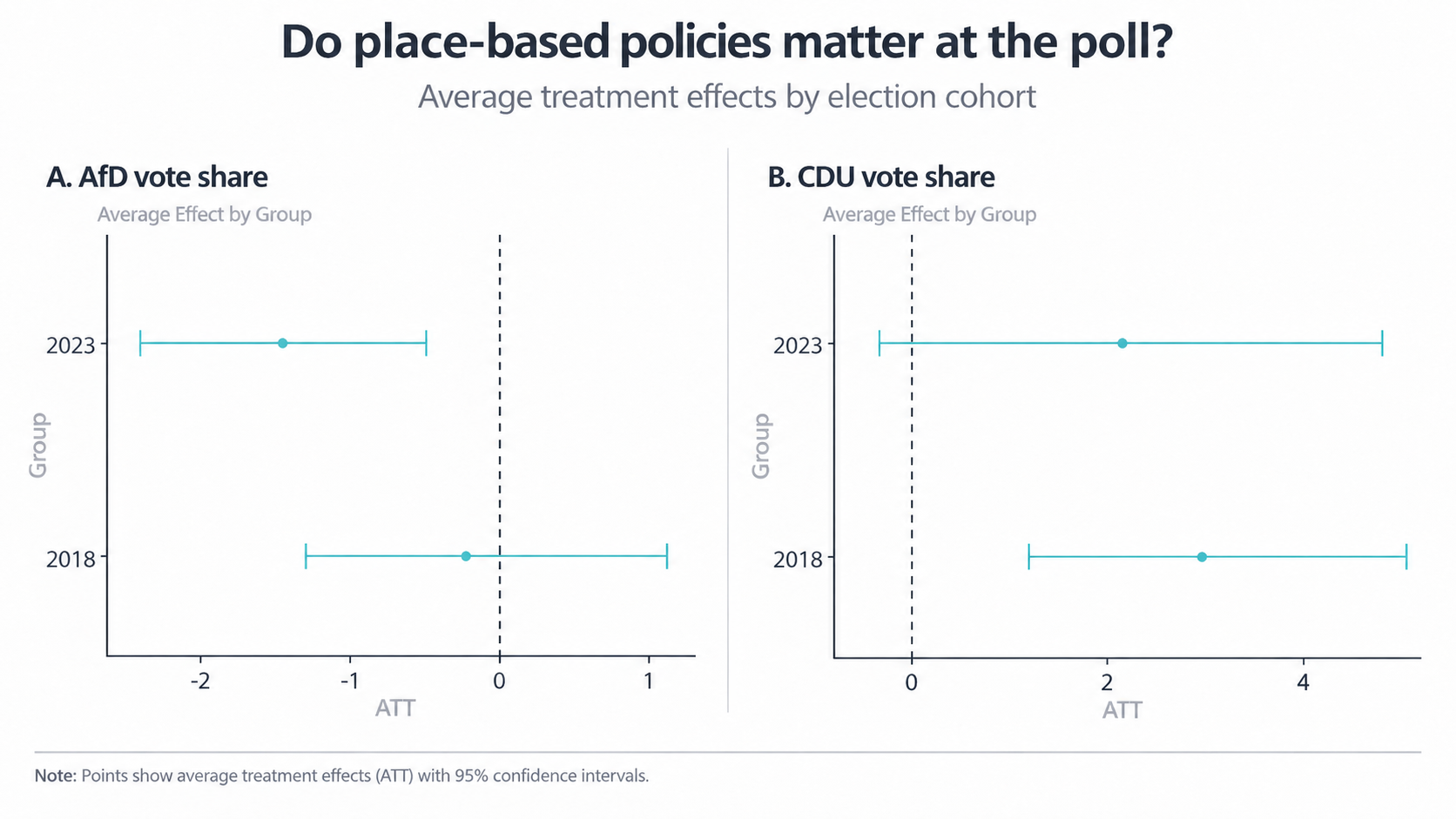
Estimated effects of place-based policy on party vote shares

Working paper

Do place-based policies matter at the poll?

With Luisa Doerr and Florian Dorn (ifo Munich)

We exploit quasi-experimental variation from Bavaria’s rule-based public-agency relocations to ask whether place-based economic policy changes voting behavior. The design links a large regional-development intervention to electoral outcomes across treated municipalities and elections.

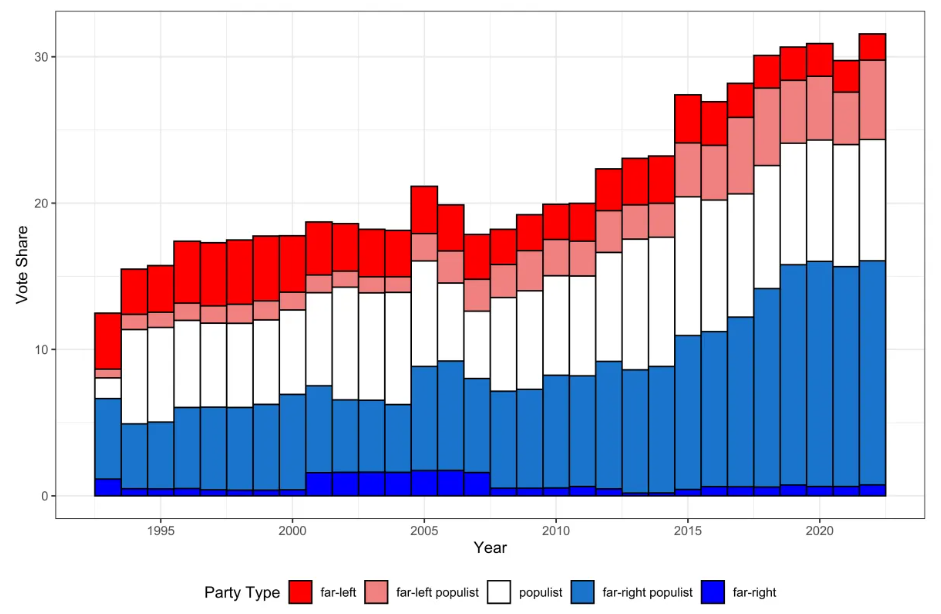
Far-right and populist party vote shares over time

Working paper

The Drivers of Far-Right Populism in Western Democracies

With Patrick Zwerschke

We assemble a cross-country dataset covering more than 26 candidate drivers of far-right populism in over 30 Western democracies and explicitly confront model uncertainty. Bayesian Model Averaging identifies robust determinants, while Bayesian Additive Regression Trees uncover nonlinearities that standard linear models can miss.

Cover of the Institute for Replication discussion paper

Working paper

A comment on Xu (2022) “Reshaping Global Trade: The Immediate and Long-Term Effects of Bank Failures”

With Guillaume Bérard (Luxembourg Institute of Socio-Economic Research) and Priyam Verma (Aix-Marseille Univ, CNRS, EHESS, AMSE)

We reproduce Xu’s estimates of the long-run trade effects of the 1866 banking crisis, identify implementation issues, and reassess the results using alternative weighting, spatial-HAC inference, and staggered difference-in-differences. The paper’s central result remains robust.